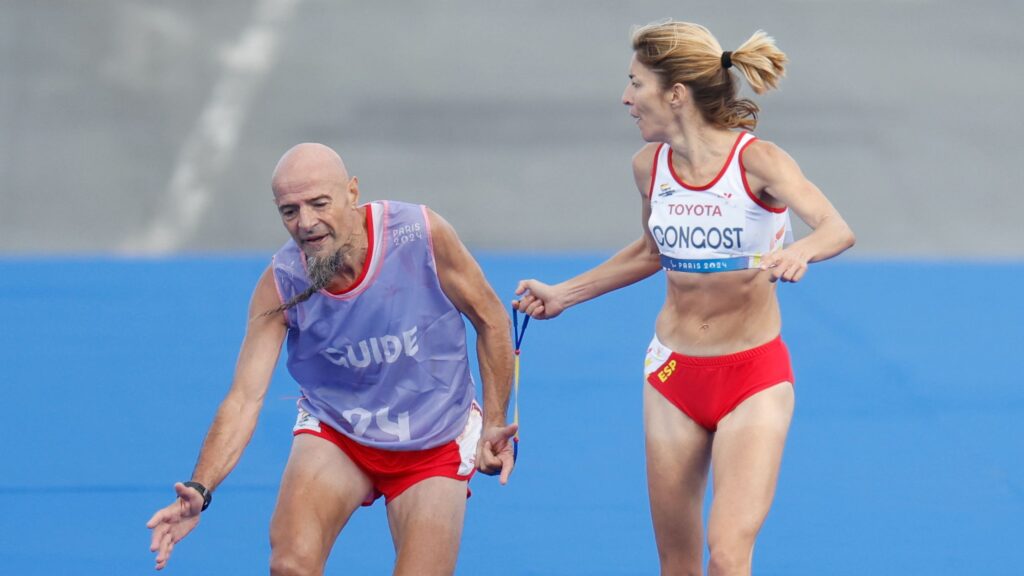
II share with you the link to a short INTERVIEW that I have done in RÀDIO 4 about the situation that has recently lived the Catalan athlete Elena Congost, who has been the sad protagonist of one of the images of the Paralympic Games in Paris.
The athlete, who is visually impaired, was 10 meters from the finish line and was close to the bronze medal but was disqualified for releasing the rope for a few seconds to help her guide, Mia Carol, whose legs failed due to cramps.
A decision that has generated much controversy and called into question Olympic values and the rigidity of the rules governing the competition.
The interview starts at MINUTE -1:48:10 (at the beginning of the radio program). You will have to drag the bar that shows the progress of the program to go directly to it. It is in Catalan, but you may be able to understand it without too much difficulty.
I share with you the link to an interview that I have done in RÀDIO 4 about the importance of “Psychology and Sports Coaching to promote the mental and emotional health of elite athletes”.
This program arises motivated by the celebration of the Olympic Games in Paris and is a loudspeaker of a need increasingly recognized at the sporting and social level, which is the importance of taking care of the mental health of athletes.
The interview starts at MINUTE 30 (half of the radio program). You will have to drag the bar that shows the progress of the program to go directly to it. It is in Catalan, but you may be able to understand it without too much difficulty.
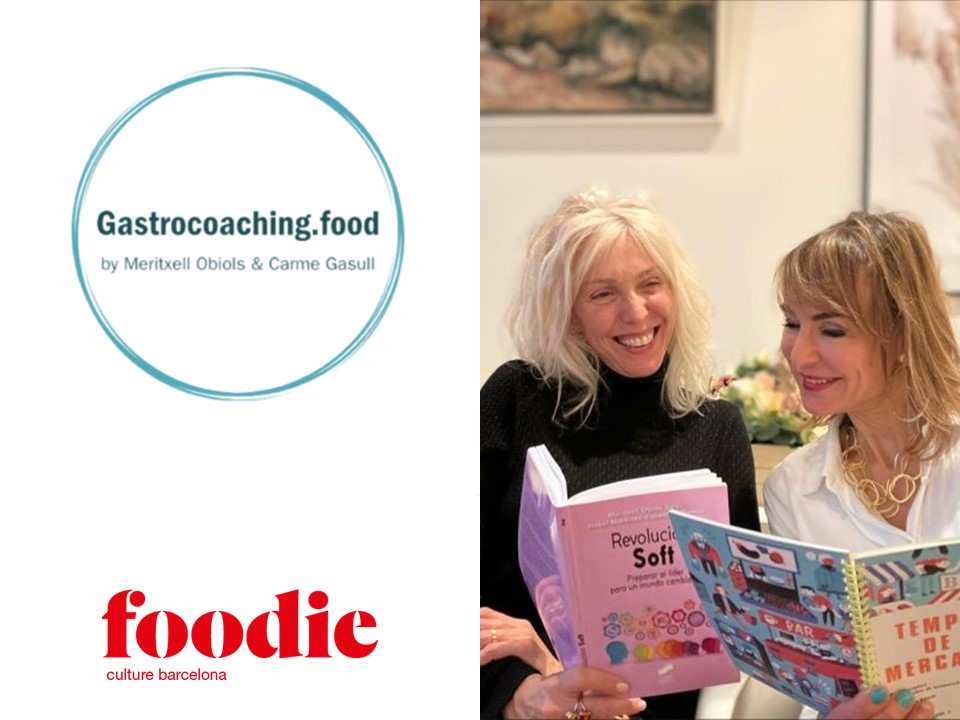
I invite you to read this magnificent article that presents and describes very well the concept, content, objectives and recipients of the Gastrocoaching.food project that, together with Carme Gasull (journalist and communicator, specialized in food and gastronomy), we present in the framework of the renowned and prestigious “Fòrum Gastronòmic de Girona” 2024.
Click on the image to access to the complete article.
In Laura Marajofsky’s article, published by Forbes Argentina magazine (June 2022), along with other specialized colleagues, I share my opinion and vision on a topic that concerns many different organizations.
Discussions of emotional education have come into fashion in recent years in different fields, ranging from education to the home, with attempts made for both individuals and organizations to include this educational aspect. The business world is addressing this issue, too. While the trend is relatively incipient, it is on the rise. The fact is, learning to understand and manage our emotions leads to better performance and productivity. This is why we point the finger at “emotional illiteracy” as the culprit behind many of the most frequent problems at organizations: leaves of absence (due to anxiety, stress, depression, burnout), high turnover rates and, of course, workplace conflict (due to a lack of emotional regulation).
Another thing that has recently come up in conversation is emodiversity, meaning the ability to experience greater granularity in emotion. You can train your emotions, allowing you to better understand others and communicate your needs. In this regard, perhaps the most interesting aspect is that, in a culture where society aims for increasing tolerance and inclusiveness by taking bioindividualities into account, it is no longer enough to only think in terms of neuro-cognitive diversity. We also need to talk about each individual’s emotional times and processes.
I would like to invite you to read this interesting article.
With Montse Pardo, we talk about coaching for entrepreneurs and businesspeople on EMPREndiendo, masterfully hosted by Alexandre Gonzalez Capel.