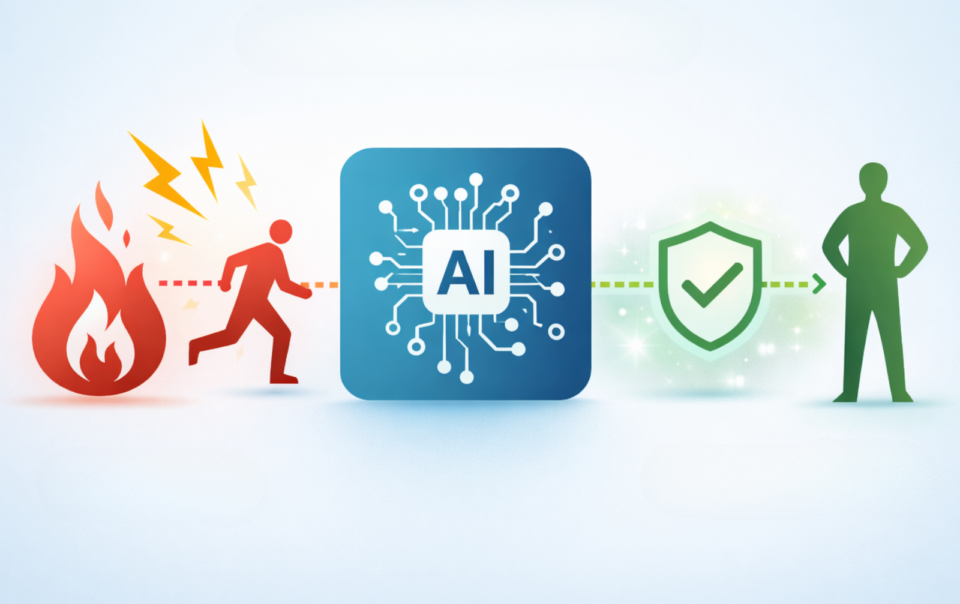
It would be very easy to let AI redefine, without us even noticing, what it means to accompany another person. To let it enter through the door of efficiency and quietly take center stage in the coaching process.
After thirty years sitting across from leaders, I know that cannot happen. Not because AI is not useful (it is, very much so), but because coaching is, at its core, a profoundly human act. AI can be an extraordinary tool, but it is still just that, a tool, like a pen, a notebook, or any other resource that helps or accelerates our work.
The direction of the process, however, the judgment behind it, the responsibility for what happens in that conversation, none of that can be delegated.
And that is precisely where ethics begins.

What AI Can Already Do, and Does Well
Before talking about ethics, it is worth being precise about what we are actually discussing. Because AI is not one single thing, and confusing the whole with one of its parts is one of the most common mistakes in this debate.
Today, artificial intelligence can help a coach prepare better for a session, analyze previous notes, identify patterns in a client’s discourse over time, suggest relevant theoretical frameworks, or identify areas that have not yet been explored. It can also support follow-up between sessions, structure progress reports, or systematize learning more efficiently than human memory would allow.
All of that is valuable. All of that makes sense. And all of that can improve the quality of coaching, provided it does not replace the coach’s judgment.
The problem is not using AI. The problem is using it without asking ourselves what it means to do so.
The Ethical Issue That Few People Are Naming
There is a practice that is spreading with surprisingly little reflection, the use of AI tools in coaching processes without informing the client.
It may seem harmless. After all, a coach uses many resources that the client does not know in detail, theoretical frameworks, assessment models, books and research that have shaped the coach’s perspective. Why should AI be any different?
The difference is significant. When a coach introduces information from a coaching process (session notes, descriptions of situations, patterns of behaviour) into an AI tool, they are transferring highly sensitive information to an external system. Obviously, they do so carefully, avoiding names or identifying details, but it is still information that the client shared within a space of complete trust, without knowing that it would leave that space.
That is not a technical detail. It is a matter of trust. And in coaching, trust is not simply the context of the process, it is the process itself.
There is also a second risk, more subtle but equally important, the illusion of objectivity. Language models produce responses that are fluent, well constructed, and analytically convincing. A coach with less experience, or simply under greater time pressure, may be tempted by that fluency and replace their own professional and relational judgment with the quick response of an algorithm. In a process that works with human complexity, that is a mistake that can have real consequences.
Ethical Principles for Responsible Use
This is not about prohibiting the use of AI in coaching. It is about using it according to the same principles that govern every serious professional decision.
Integrity of the coaching relationship. AI can help you arrive better prepared for a session. It cannot replace what happens within it. The moments of genuine presence (embodied listening, intuition that emerges through human connection, the silence intentionally chosen at exactly the right moment) cannot be processed. They are irreducibly human. Preserving them is not a romantic position, it is a condition for effectiveness.
Interpretive responsibility. AI can make suggestions, but it is always the coach who decides. No matter how sophisticated the technology becomes, it has no access to the complete history of a person, to what remains unspoken, or to what can only be sensed in the room. The coach’s judgment is not an addition to AI analysis, it is the condition that makes it meaningful.
What AI Cannot Do
There is a space within the coaching process that no algorithm can inhabit. Not because the technology is not advanced enough, but because that space is made up of something technology cannot generate, presence.
Relational presence is the ability to be fully available to another person. To receive what they bring without filters, without an agenda, without the noise of what we already know or expect. It is the condition that makes it possible for someone to say aloud something they had never allowed themselves to think.
AI can analyse what has been said. It cannot create the environment in which something difficult becomes possible to say.
Nor can it read the body language of someone who tenses up while talking about their team, but smiles. It cannot detect an emotion that does not yet have a name. It cannot choose not to ask a question because the moment is not the right one.
Those decisions, microscopic, constant, deeply human, are the heart of coaching. And they are what justify having a trained and accredited professional at the centre of the process.
A Question Before Moving Forward
If a client asked you tomorrow exactly how you had used AI throughout their coaching process, could you answer with complete transparency? And would you be satisfied with your own answer?

Ethics Is Not a Constraint. It Is an Identity
The debate about AI in coaching will not be resolved with a list of best practices, nor with another professional code of ethics. It will be resolved, or not, according to the professional maturity of those who practise coaching.
A coach who uses AI thoughtfully, transparently, and always subordinate to their own judgment is not giving up efficiency. They are demonstrating that they know who they are and what they do. That they understand the difference between a tool and a process. Between data and a person.
The efficiency that AI offers is real and welcome. But ethics cannot become an optional adjustment that is activated only when there is time, or when someone asks. It is the framework from which every professional decision is made.
And that framework, ultimately, is not installed by any language model. It is built by every coach, every day, in every conversation.
Has this article raised any questions about how you are integrating AI into your own practice?
If you would like to explore these issues in greater depth, from the perspective of leadership, coaching, or team development, you are welcome to contact me obiols@coachingbcn.com or visit www.meritxellobiols.com